
Waking up with a migraine can be particularly frustrating because symptoms often begin before the day even starts, affecting energy, concentration, and overall well-being. Morning migraines are a common pattern among migraine sufferers and are often linked to sleep-related physiological changes.
Morning migraines are one of the most common and most disruptive patterns migraine sufferers experience, and they can turn what should be a peaceful start to the day into a struggle before you’ve even gotten out of bed.
Migraines affect millions of people, and for many, the hours right after waking are consistently the worst part of the day. If this pattern sounds familiar, our primary care team can help identify the root cause and build a long-term prevention plan.
Why Do Morning Migraines Happen?
Morning migraines may result from circadian rhythm changes, hormonal fluctuations, sleep disturbances, and other physiological processes that occur during the night. Although sleep generally supports neurological recovery, certain sleep-related changes in brain chemistry and hormone levels may increase migraine susceptibility in some individuals.
Here are the leading reasons morning migraines occur:
- Sleep disruptions: Both too little and too much sleep can trigger a migraine. Irregular sleep schedules, frequent waking, or conditions like sleep apnea reduce the quality of deep sleep your brain needs to regulate pain signals.
- Low blood sugar (nocturnal hypoglycemia): Going 7–9 hours without eating causes blood sugar to drop, which can trigger head pain by early morning.
- Dehydration: You lose fluids simply by breathing and sweating overnight. Even mild dehydration is a well-known migraine trigger.
- Hormonal fluctuations: Cortisol and other hormones naturally rise in the early morning hours, and this shift can provoke migraine activity in sensitive individuals.
- Teeth grinding (bruxism): Clenching or grinding your teeth during sleep strains the jaw and neck muscles, which can radiate into a morning headache.
- Medication overuse: Overusing pain relievers can cause “rebound” headaches that are often worse first thing in the morning.
- Poor sleep posture: Sleeping in positions that strain the neck and surrounding muscles may contribute to tension and increase the likelihood of headache symptoms.
- Caffeine or alcohol withdrawal: If your last drink or coffee was the evening before, your body may go into mild withdrawal overnight, sparking a headache by morning.
Common Overnight Migraine Triggers at a Glance
| Trigger | How It Affects You | Typical Onset |
| Sleep apnea/snoring | Reduces oxygen levels during sleep | Upon waking |
| Skipping dinner / low blood sugar | Blood glucose drops overnight | Early morning |
| Dehydration | Reduces blood volume and oxygen flow to the brain | Morning |
| Teeth grinding | Strains jaw, temples, and neck muscles | Morning, with jaw soreness |
| Medication overuse | Causes rebound headache as medication wears off | Early morning |
| Stress or anxiety | Raises cortisol and muscle tension overnight | Morning |
Why Do I Wake Up With a Migraine Every Day?
Frequent morning migraines often indicate an underlying trigger that repeatedly occurs during sleep or shortly before waking. Daily morning migraines are usually linked to one or more of the following:
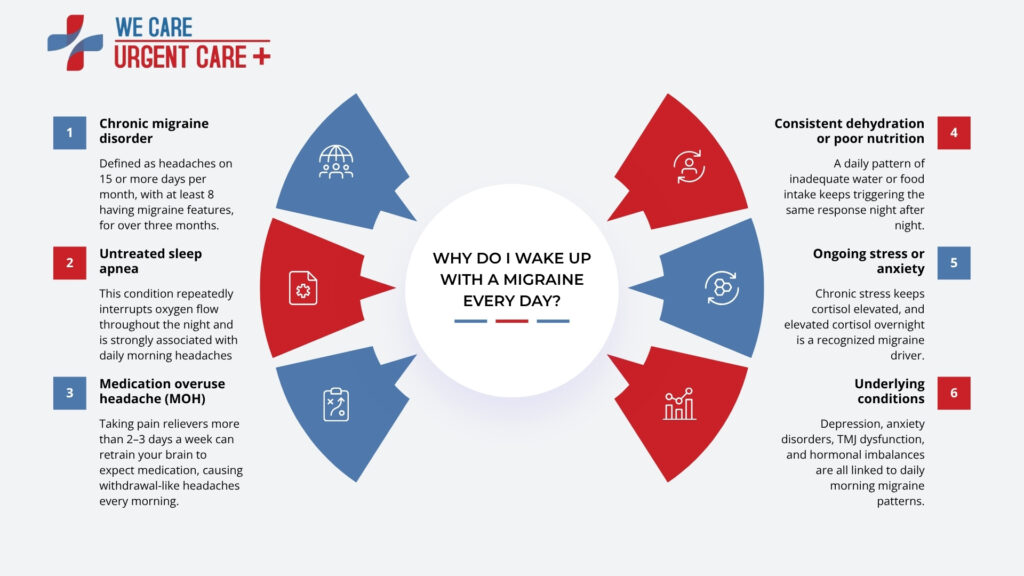
- Chronic migraine disorder: Defined as headaches on 15 or more days per month, with at least 8 having migraine features, for over three months.
- Untreated sleep apnea: This condition repeatedly interrupts oxygen flow throughout the night and is strongly associated with daily morning headaches.
- Medication overuse headache (MOH): Taking pain relievers more than 2–3 days a week can retrain your brain to expect medication, causing withdrawal-like headaches every morning.
- Consistent dehydration or poor nutrition: A daily pattern of inadequate water or food intake keeps triggering the same response night after night.
- Ongoing stress or anxiety: Chronic stress keeps cortisol elevated, and elevated cortisol overnight is a recognized migraine driver.
- Underlying conditions: Depression, anxiety disorders, TMJ dysfunction, and hormonal imbalances are all linked to daily morning migraine patterns.
Morning Migraine vs. Regular Headache: How to Tell the Difference
Not every headache you wake up with is a migraine. Tension headaches, sinus pressure, and dehydration-related headaches can all feel similar at first, but there are a few key differences worth noting.
| Feature | Morning Migraine | Typical Tension Headache |
| Pain quality | Throbbing or pulsing, often one-sided | Dull, constant pressure, usually both sides |
| Associated symptoms | Nausea, light/sound sensitivity, aura | Mild scalp tenderness, minimal nausea |
| Duration | 4–72 hours if untreated | 30 minutes to a few hours |
| Impact on activity | Often disabling; needs rest in a dark room | Usually manageable while continuing activities |
Can a Migraine Wake You Up at Night?
Migraines can also develop during sleep and may be severe enough to wake an individual unexpectedly. This is sometimes called a “nocturnal migraine” or “awakening migraine.”
Migraines that wake you up during the night are often linked to:
- Changes in sleep stage, particularly transitions into or out of REM sleep
- Sleep apnea or breathing interruptions that spike briefly and trigger pain
- Low blood sugar in the middle of the night
- Hormonal surges, especially in people who experience menstrual migraines
- Increased sensitivity to light, sound, or temperature changes in the bedroom
If migraines are regularly interrupting your sleep in the middle of the night, not just greeting you in the morning, it’s worth mentioning this specific pattern to your provider, since it may point toward a sleep disorder rather than a typical migraine trigger.
What Symptoms Can Occur With a Morning Migraine?
Morning migraines are frequently accompanied by neurological and sensory symptoms that help distinguish them from other types of headaches. Recognizing the full symptom picture can help you identify a migraine versus a regular headache or tension from poor sleep.
Common Symptoms
- Throbbing or pulsing pain, often on one side of the head
- Sensitivity to light (photophobia) and sound (phonophobia)
- Nausea or vomiting
- Blurred vision or visual disturbances (aura)
- Neck stiffness or jaw soreness
- Fatigue or grogginess that feels different from normal morning tiredness
- Dizziness or lightheadedness
- Difficulty concentrating (“brain fog”)
Migraine Phases and What to Expect
| Phase | When It Occurs | Typical Signs |
| Prodrome | Hours to a day before | Mood changes, food cravings, neck stiffness, yawning |
| Aura (not everyone experiences this) | Right before or with pain onset | Visual flashes, blind spots, tingling |
| Attack (headache phase) | Upon waking or shortly after | Throbbing pain, nausea, light/sound sensitivity |
| Postdrome | After the pain subsides | Fatigue, difficulty concentrating, mild lingering discomfort |
How Can You Prevent Waking Up With a Migraine?
Preventing morning migraines often involves identifying and managing the specific triggers contributing to attacks. Prevention is most effective when it targets the specific triggers you’ve noticed in your own pattern.
Evening and Bedtime Habits
- Keep a consistent sleep schedule: go to bed and wake up at the same time every day, including weekends.
- Avoid late, heavy meals and reduce alcohol in the hours before bed.
- Stay hydrated throughout the day, and keep water within reach at night. For fast relief when dehydration is the culprit, IV therapy services can help restore fluids and ease migraine symptoms quickly.
- Limit screen time and blue light exposure for at least 30–60 minutes before sleep.
- Address teeth grinding with a night guard if you suspect bruxism.
- Keep your bedroom cool, dark, and quiet to support uninterrupted sleep cycles.
Daytime and Lifestyle Habits
- Eat balanced meals at regular intervals to avoid overnight blood sugar dips.
- Manage stress with relaxation techniques such as breathing exercises, stretching, or short walks.
- Track your migraines in a journal or app to identify personal triggers (food, weather, hormones, stress)
- Avoid overusing over-the-counter pain medications more than 2–3 days per week.
- Get evaluated for sleep apnea if you snore heavily or feel exhausted despite a full night’s sleep.
- Talk to a provider about preventive migraine medication if attacks are frequent or severe.
When Is a Morning Migraine a Warning Sign?
Most morning migraines are linked to everyday triggers like sleep, hydration, and stress. However, certain patterns or accompanying symptoms can indicate a more serious underlying issue that needs prompt medical evaluation.
Seek medical attention if your morning migraine comes with any of the following:
- Sudden, severe (“thunderclap”) pain: Pain that reaches maximum intensity within seconds can signal a medical emergency.
- Fever, stiff neck, or rash: These can point to infection, such as meningitis.
- Confusion, slurred speech, or weakness on one side: These are warning signs of a possible stroke and require immediate emergency care.
- Vision loss or double vision: Especially if this is new or different from typical migraine aura.
- A headache that steadily worsens over days or weeks: This pattern is different from the typical migraine cycle and should be evaluated.
- New onset after age 50: Migraines that begin later in life should always be assessed by a provider to rule out other causes.
- Head pain following a head injury: Even a mild injury can cause complications that surface as a morning headache.
- Changes in a known migraine pattern: If your typical migraine suddenly feels different in intensity, location, or associated symptoms, it’s worth getting checked
If your morning migraine comes with any of these warning signs, don’t wait it out; visit our adult urgent care clinic for a same-day evaluation.
Final Thoughts
Waking up with a migraine can feel like your day is being derailed before it even starts, but understanding the “why” behind it puts you back in control. In most cases, morning migraines trace back to identifiable, manageable factors: poor sleep quality, dehydration, dropping blood sugar, stress, or medication overuse.
Persistent morning migraines should be medically evaluated to identify potential underlying causes and appropriate treatment options. If morning migraines have become a regular part of your routine, the team at We Care Urgent Care Plus is ready to help you find real answers, not just temporary relief.