
Most people think of asthma as a childhood condition, something you either grow up with or grow out of. But the truth is more complicated. Asthma can absolutely develop later in life, even in people who have never had breathing problems before and have no family history of the condition. This is known as adult-onset asthma, and it is far more common than most people realize.
Everything you need to know about asthma developing later in life: what causes it, how it differs from childhood asthma, the warning signs to watch for, how doctors diagnose it, and what treatment options are available. If you’ve been experiencing unexplained coughing, wheezing, or shortness of breath as an adult, this article will help you understand what might be going on and when it’s time to get checked out.
Can Asthma Develop Later in Life?
Yes, asthma can develop at any age, including well into adulthood, middle age, or even after age 65. While asthma is often diagnosed in childhood, research shows that a significant percentage of new asthma diagnoses occur in adults, sometimes referred to as “late-onset” or “adult-onset” asthma.
This can be confusing and frustrating for adults who suddenly find themselves wheezing, coughing, or struggling to catch their breath with no prior history of respiratory issues. The good news is that adult-onset asthma is a well-recognized medical condition, and with proper diagnosis and treatment, it can be managed effectively, allowing most people to continue their normal daily activities.
What Is Adult-Onset Asthma?
Adult-onset asthma refers to asthma that first appears after age 20, though it is most frequently diagnosed in people in their 30s, 40s, and 50s. Unlike childhood asthma, which is often linked to allergies and tends to improve or resolve with age, adult-onset asthma tends to be a long-term, chronic condition that requires ongoing management.
Here’s how adult-onset asthma generally compares to childhood asthma:
| Feature | Childhood Asthma | Adult-Onset Asthma |
| Typical trigger | Allergies (pollen, pet dander, dust mites) | Often non-allergic triggers (irritants, infections, hormones) |
| Family history | Common | Less common |
| Course over time | May improve or resolve by adulthood | Usually chronic and persistent |
| Severity | Often mild to moderate | Can be more severe and harder to control |
| Diagnosis | Usually straightforward | Often delayed or mistaken for other conditions |
Adult-onset asthma can develop gradually, with mild symptoms that worsen over months or years, or it can appear more suddenly, often triggered by a respiratory infection, a new environmental exposure, or a major hormonal shift.
What Causes Asthma to Develop Later in Life?
There isn’t one single cause of adult-onset asthma. Instead, it usually results from a combination of genetic predisposition and environmental or lifestyle triggers. Some of the most common contributing factors include:
- Respiratory infections: A severe cold, flu, or bout of bronchitis/pneumonia can inflame and sensitize the airways, sometimes triggering asthma that persists long after the infection clears.
- Occupational exposure: Long-term exposure to chemical fumes, dust, mold, cleaning agents, or industrial irritants at work can cause “occupational asthma,” common in fields like manufacturing, construction, healthcare, farming, and hairdressing.
- Hormonal changes: Women are more likely than men to develop asthma later in life, and hormonal shifts related to pregnancy, perimenopause, and menopause are thought to play a role.
- Obesity: Excess weight increases inflammation throughout the body and puts additional pressure on the lungs and diaphragm, both of which can contribute to new-onset asthma symptoms.
- Smoking and secondhand smoke: Long-term exposure to tobacco smoke damages airway tissue and increases the risk of developing asthma, even in people who never smoked themselves.
- Allergies developing later in life: Some adults develop new allergies to pets, pollen, mold, or dust mites that trigger asthma symptoms for the first time. If new allergies seem to be behind your symptoms, our allergy testing and treatment services can help pinpoint the exact trigger and get you on a plan to manage it.”
- Chronic sinus issues or acid reflux (GERD): Both conditions can irritate the airways and are frequently linked to adult-onset asthma.
- Stress and mental health: Chronic stress and anxiety can affect breathing patterns and immune response, potentially contributing to airway inflammation.
- Environmental pollution: Long-term exposure to air pollution, wildfire smoke, or poor indoor air quality is increasingly recognized as a trigger for late-onset asthma.
What Are the Signs and Symptoms of Adult-Onset Asthma?
Adult-onset asthma symptoms are similar to childhood asthma symptoms, but they’re often mistaken for other conditions like a lingering cold, allergies, acid reflux, or even normal aging. Recognizing the signs early can help you get an accurate diagnosis sooner.
Common symptoms include:
- Persistent coughing, especially at night or early morning
- Wheezing or a whistling sound when breathing
- Shortness of breath, even during light activity
- Chest tightness or a feeling of pressure in the chest
- Difficulty sleeping due to coughing, wheezing, or breathlessness
- Fatigue caused by disrupted sleep or reduced oxygen intake
- Symptoms that worsen with exercise, cold air, allergens, or respiratory infections
- Frequent throat clearing or a feeling of mucus in the throat
How Is Adult Asthma Diagnosed?
Because adult-onset asthma symptoms overlap with other conditions such as COPD, bronchitis, heart disease, and acid reflux, diagnosis typically involves a combination of medical history review, physical examination, and lung function testing.
A healthcare provider will typically:
| Step | What It Involves |
| Medical history review | Discussing symptoms, triggers, family history, occupational exposures, and smoking history |
| Physical examination | Listening to the lungs for wheezing or abnormal sounds |
| Spirometry | A breathing test that measures how much air you can exhale and how quickly, to assess airway narrowing |
| Peak flow measurement | Tracking how fast you can exhale to monitor airway function over time |
| Bronchoprovocation test | Measuring airway sensitivity to a triggering substance under controlled conditions |
| Allergy testing | Skin or blood tests to identify allergens that may be triggering symptoms |
| Chest X-ray or CT scan | Used to rule out other lung conditions such as infections or COPD |
Because there is no single definitive test for asthma, diagnosis is often made by combining test results with how well symptoms respond to asthma treatment (such as an inhaler). If symptoms improve significantly with asthma medication, this supports the diagnosis.
How Is Adult-Onset Asthma Treated?
The goal of asthma treatment is to control inflammation, reduce symptoms, and prevent flare-ups so you can breathe easily and go about daily life without limitation. Treatment plans are typically personalized based on symptom severity and triggers, and may include:
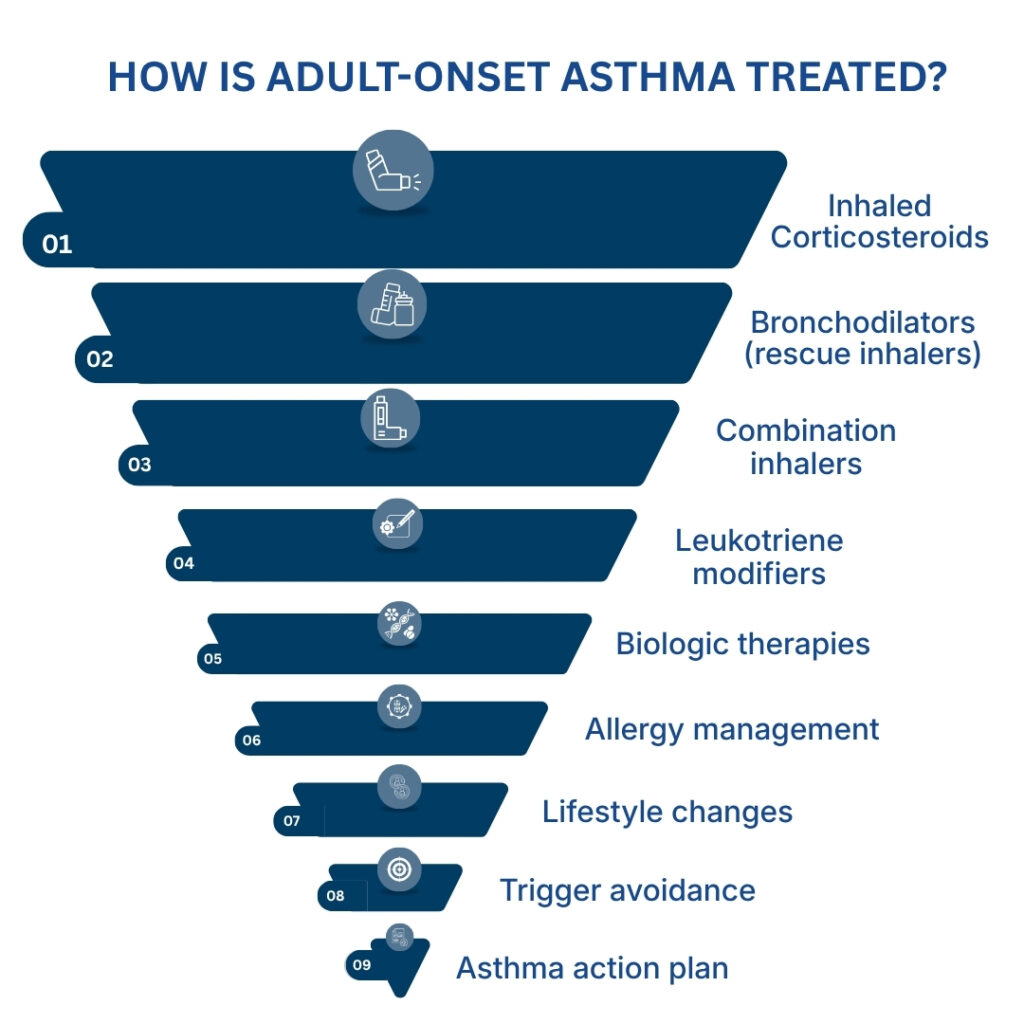
- Inhaled corticosteroids: The most common long-term controller medication, used daily to reduce airway inflammation and prevent symptoms.
- Bronchodilators (rescue inhalers): Fast-acting medications that relax airway muscles to relieve sudden symptoms like wheezing or shortness of breath.
- Combination inhalers: Medications that combine a corticosteroid with a long-acting bronchodilator for more consistent control.
- Leukotriene modifiers: Oral medications that help block inflammatory responses in the airway.
- Biologic therapies: Newer injectable medications for moderate-to-severe asthma that target specific immune pathways driving inflammation.
- Allergy management: Antihistamines, nasal sprays, or allergy shots (immunotherapy) if allergies are a contributing trigger.
- Lifestyle changes: Weight management, quitting smoking, improving indoor air quality, and managing acid reflux can significantly reduce flare-ups.
- Trigger avoidance: Identifying and minimizing exposure to personal triggers, such as workplace irritants, pet dander, or strong fragrances.
- Asthma action plan: A personalized, written plan created with your provider that outlines daily management and what to do if symptoms worsen.
Most people with adult-onset asthma can achieve good symptom control with the right combination of medication and lifestyle adjustments, though it may take some trial and error to find the treatment plan that works best for you.
Since adult-onset asthma is usually a lifelong condition, working with our primary care team for long-term asthma management can help you stay ahead of flare-ups with regular check-ins and an evolving treatment plan.
Is Adult-Onset Asthma Permanent?
In most cases, yes, adult-onset asthma tends to be a chronic, long-term condition rather than something that resolves on its own. Unlike some cases of childhood asthma that improve with age, adult-onset asthma often requires ongoing management throughout life.
That said, “permanent” doesn’t mean unmanageable. With consistent treatment, most adults with asthma can:
- Significantly reduce or eliminate symptom flare-ups
- Maintain normal lung function
- Continue exercising and engaging in physical activities
- Sleep well without nighttime coughing or breathlessness
- Avoid emergency room visits or hospitalizations
In some cases, particularly when asthma is triggered by a temporary factor like a respiratory infection, a specific workplace exposure that is later removed, or short-term hormonal changes, symptoms may improve substantially or even resolve once the trigger is addressed. However, ongoing monitoring is still recommended, since the airways may remain more sensitive going forward.
When Should You See a Healthcare Provider?
If you have a persistent cough, wheezing, shortness of breath, or chest tightness that lasts for more than a few weeks, it’s important to see a healthcare provider. You should also seek medical evaluation if your breathing becomes worse during exercise, in cold air, or after exposure to allergens or other triggers.
Additionally, schedule an appointment if you frequently wake up coughing or feeling short of breath, rely on over-the-counter cough or allergy medications without relief, or if your symptoms begin to affect your sleep, work, or daily activities. Early diagnosis and treatment can help prevent symptoms from worsening and improve your quality of life.
If your symptoms are new, worsening, or interfering with daily life, don’t wait it out; visit our adult urgent care clinic for a same-day evaluation and fast relief.”
The Bottom Line
Asthma isn’t just a childhood condition; it can develop at any point in life, often triggered by infections, environmental exposures, hormonal changes, or lifestyle factors. Recognizing the signs of adult-onset asthma early and seeking proper diagnosis and treatment can make a significant difference in your quality of life and long-term lung health.
If you’ve been dealing with unexplained coughing, wheezing, or shortness of breath, don’t brush it off as “just getting older” or a lingering cold. Getting evaluated sooner rather than later can help you get the right treatment plan in place and breathe easier for years to come. At We Care Urgent Care Plus, we’re committed to providing compassionate, high-quality care for patients of all ages.