Visiting a new primary care provider is a key step in taking control of your health, ensuring continuity of care, and building a trusting relationship with your doctor. Knowing what to expect from a new primary care provider can help ease any anxiety before your appointment. This blog will guide you through preparing for your first visit with a new primary care physician, including essential tips and practical steps.
From knowing which questions to ask to understanding what happens during the appointment, being prepared makes your visit more productive. We’ll also provide a handy checklist to help you cover all the important details. By the end, you’ll feel confident and informed about what to expect from a new primary care provider and how to make the most of your first visit.
Why Establishing Care with a Primary Care Provider Matters
Establishing care with a primary care provider is essential for maintaining overall health and staying on top of preventive care. A PCP helps track your health, detect issues early, and ensure continuity of care during pcp office visits. Here’s why it matters:
- Regular monitoring of your health and vital signs
- Early detection of potential health concerns
- Consistent guidance and a personalized care plan
- Simplifies how to get a PCP and access needed services
Preparing for Your First Visit With PCP
Getting ready for your first appointment with a primary care provider ensures that your visit is productive and helps your doctor understand your health better. Here’s a detailed guide for preparing for a primary care visit and knowing what to bring to a first doctor appointment:
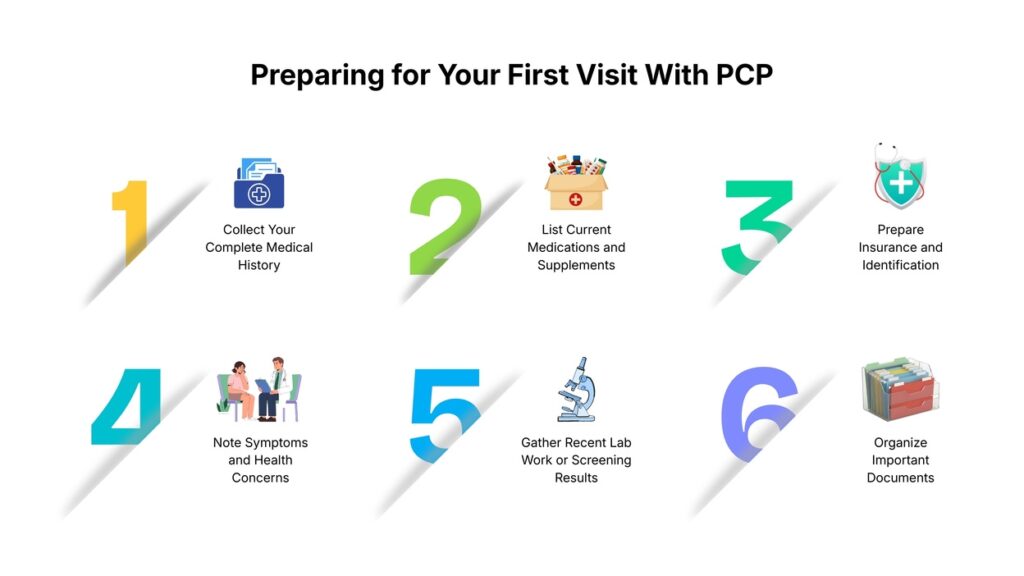
- Collect Your Complete Medical History: Include past illnesses, surgeries, hospitalizations, allergies, and family health conditions. This gives your new PCP a clear picture of your overall health and potential risks.
- List Current Medications and Supplements: Write down all prescription medications, over-the-counter drugs, and vitamins or supplements, along with dosages. This helps prevent drug interactions and guides treatment decisions.
- Prepare Insurance and Identification: Bring your insurance card, photo ID, and any necessary referral forms. Having these ready ensures your visit goes smoothly and avoids delays at the front desk.
- Note Symptoms and Health Concerns: Make a list of any current symptoms, health worries, or lifestyle issues. Prioritizing your questions can help you cover everything important during the appointment.
- Gather Recent Lab Work or Screening Results: Bring recent test results, imaging reports, or vaccination records. Your PCP can review these to track changes in your health and plan future screenings effectively.
- Organize Important Documents: Keep all medical documents, contact information for previous doctors, and a notepad for taking notes during the visit. Being organized ensures nothing is overlooked and makes follow-up care easier.
What to Expect During a Primary Care Visit
Visiting a new primary care physician can feel overwhelming, but knowing what happens at a primary care visit can make the experience smoother. Here’s a typical flow for your first visit with a new primary care physician:
1. Initial Paperwork and Patient Intake
At the start, you’ll complete forms covering personal details, medical history, allergies, and insurance information. This step ensures the clinic has all the necessary information for your care.
2. Physical Exam and Vital Signs Check
Your PCP will usually measure your height, weight, blood pressure, heart rate, and temperature. A basic physical exam may also include listening to your heart and lungs and checking other vital indicators.
3. Discussion of Medical History, Lifestyle, and Preventive Care Needs
Expect a detailed conversation about your past illnesses, family health history, diet, exercise, sleep habits, and any ongoing symptoms. This helps your doctor understand your overall health and guide preventive care strategies.
4. Recommended Tests or Screenings
Based on your age, medical history, and risk factors, your PCP may suggest lab tests, imaging, or other preventive screenings. These recommendations are tailored to keep you healthy and catch potential issues early.
Questions to Ask Your New Doctor
Your first visit with a new primary care physician is an important opportunity to understand your health and establish a care plan. Coming prepared with thoughtful questions ensures you cover chronic condition management, medications, preventive care, and follow-up procedures. Knowing questions to ask a new doctor on a first visit helps you get the most out of your appointment and feel confident in your healthcare journey.
- How will you help me manage my chronic conditions, such as diabetes, high blood pressure, or asthma?
- Are there any changes or updates needed for my current medications?
- What preventive care measures, screenings, or vaccinations do you recommend for me at this stage?
- How should I schedule follow-up visits, and what is the best way to contact you for questions between appointments?
- Are there any lifestyle changes you suggest to improve my overall health and well-being?
- What symptoms or health issues should I monitor closely and report promptly?
Creating a Primary Care Provider Checklist
A well-prepared visit starts with a clear primary care provider checklist. Having everything organized ensures you make the most of your time with your doctor and don’t forget any important details. Here’s what to include when thinking about what to bring to a first doctor appointment:
- Essential Documents: Bring your insurance card, photo ID, previous medical records, lab results, and vaccination history. These help your doctor understand your medical background quickly.
- Symptoms and Questions: Write down any current symptoms, health concerns, or questions you want to discuss. Prioritizing them ensures you cover the most important topics during your visit.
- Health Goals: Note your personal health goals, whether it’s improving fitness, managing a chronic condition, or preventive care. Sharing these helps your PCP create a plan tailored to you.
- Follow-Up Appointments and Labs: Keep a list of any scheduled or needed screenings, lab tests, or referrals. This ensures continuity of care and helps your doctor track your progress.
- Medications and Supplements: List all current prescriptions, over-the-counter medications, and supplements, including dosages. This allows your PCP to review and optimize your treatment safely.
Tips for Making the Most of Your PCP Relationship
Building a strong relationship with your primary care provider is key to maintaining long-term health. After completing your first visit with a new primary care physician, staying organized and proactive helps you get the most out of every appointment. Keep your medical records, medications, and recent test results up to date so your doctor has a complete picture of your health. This allows for more accurate advice and better care planning.
Open communication and regular checkups are also essential. Don’t hesitate to share concerns, ask questions, or discuss lifestyle changes with your PCP. Scheduling routine visits and using telehealth options, if available, ensures continuity of care while making follow-ups more convenient. By following these tips, you can foster a trusted, long-term partnership with your doctor and take an active role in your health journey.
Conclusion
Visiting a new primary care provider doesn’t have to be stressful. By knowing what to expect from a new primary care provider, preparing your documents, noting your questions and health goals, and using a structured checklist, you can make your first visit productive and stress-free. Understanding the flow of a typical appointment and staying proactive in your care ensures that you get the most out of your relationship with your PCP.
Take charge of your health by scheduling your first visit and bringing your checklist to stay organized and confident. Start your journey to better health by booking your first PCP visit today! Being prepared, informed, and engaged sets the foundation for long-term wellness and a strong partnership with your doctor.
FAQs
Q1. How often should I see my primary care provider?
The frequency depends on your age, health conditions, and preventive care needs. Generally, healthy adults benefit from an annual checkup, while chronic conditions may require more frequent visits.
Q2. Can my primary care provider coordinate with specialists?
Yes, one of the main roles of a PCP is to manage your overall care. They can refer you to specialists, share your medical history, and ensure all providers are aligned with your treatment plan.
Q3. How do I switch to a new primary care provider?
Switching a PCP typically involves selecting a new provider through your insurance network, transferring medical records, and scheduling an initial visit to establish care.
Q4. Will my insurance cover primary care visits?
Most health insurance plans cover preventive and primary care visits. Coverage may vary depending on your plan, co-pays, and whether the PCP is in-network.
Q5. Can I use telehealth with my primary care provider?
Many PCPs now offer telehealth visits for routine follow-ups, prescription refills, or minor health concerns, providing convenience without needing an in-person visit.
Q6. What happens if I need urgent care outside of my PCP’s office hours?
Your PCP can guide you on after-hours options, such as urgent care centers, telehealth services, or the emergency room, depending on the severity of your symptoms.
Q7. How does my PCP help with preventive health screenings?
Your PCP tracks your age-appropriate screenings (like cholesterol, blood pressure, and cancer screenings) and recommends tests to catch potential health issues early.