
Ensuring your child is healthy and ready for the school year goes beyond packing the backpack or buying school supplies. A school physical plays a vital role in monitoring your child’s overall health, growth, and development. These routine checkups help detect potential health issues early, provide necessary immunizations, and ensure that your child is physically prepared to participate fully in school activities.
Understanding the purpose and benefits of a school physical is essential for every parent. By prioritizing regular school physicals, parents can confidently support their child’s health and academic readiness, making this preventive step a cornerstone of a successful school year.
What Do School Physicals Consist Of?
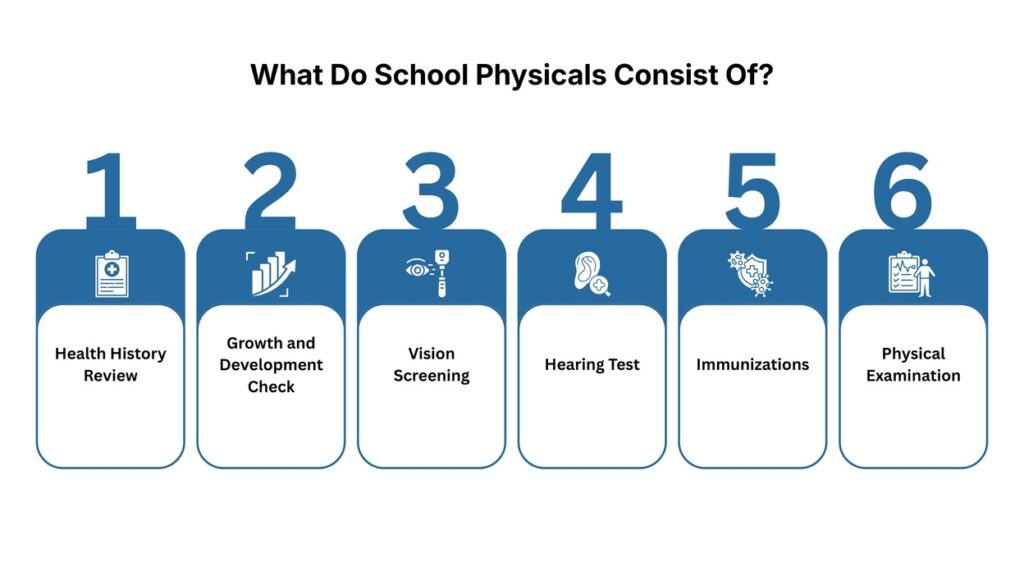
Parents often ask, “What do school physicals consist of?” Here’s a detailed breakdown:
- Health History Review: The doctor asks about past illnesses, medications, allergies, and family health history to get a complete picture of your child’s well-being.
- Growth and Development Check: Height, weight, and body mass index (BMI) are measured and plotted on growth charts to ensure your child is developing appropriately.
- Vision Screening : Detects any issues with eyesight early, which can affect learning and classroom performance.
- Hearing Test: Identifies hearing difficulties that could interfere with communication and academic progress.
- Immunizations : Ensures all vaccines are up-to-date according to school and public health requirements.
- Physical Examination : The doctor examines the heart, lungs, abdomen, skin, and musculoskeletal system to catch any early signs of health problems.
By understanding what school physicals consist of, parents can see how these exams help detect potential health issues early, ensuring children stay healthy, active, and ready to succeed in school.
Where to Get a Physical Exam for School
Parents often wonder where to get a physical exam for school. Common options include pediatrician offices, school-based clinics, and urgent care centers. Scheduling in advance and checking clinic hours can make the process quick and stress-free.
Choosing the right location also helps manage costs and convenience. Many pediatricians offer back-to-school packages, while some urgent care centers provide walk-in exams. Planning ahead ensures your child’s physical is completed on time and meets school requirements.
Determining the Need for School-Based Physical Therapy
Parents play a key role in determining the need for school-based physical therapy for their child. Physical therapy at school can support children with mobility challenges, coordination difficulties, or injuries that affect participation in classroom and playground activities. Early identification and collaboration with school staff ensure your child receives the right support to thrive academically and socially.
Signs your child may need PT support:
- Difficulty with walking, running, or navigating stairs
- Trouble with fine or gross motor skills affecting classroom tasks
- Frequent fatigue or pain during physical activity
- Challenges with balance or coordination
Assessment tips and collaboration:
- Discuss concerns with your pediatrician or physical therapist
- Share observations with teachers and school nurses
- Request a school-based evaluation if recommended by a healthcare professional
- Work together to create a tailored plan that supports your child’s daily school activities
Understanding Physical Therapy School Requirements
For parents and students exploring a career in physical therapy, understanding physical therapy school requirements is essential. These programs prepare students to help others regain mobility, manage pain, and improve overall physical function. Knowing what’s needed upfront can make the path smoother and more achievable.
Key details about physical therapy school requirements:
- Prerequisites: Strong foundation in biology, chemistry, physics, and anatomy; some programs also require psychology or statistics courses.
- Degree Options: Doctor of Physical Therapy (DPT) is the standard entry-level degree; some programs may offer accelerated or dual-degree tracks.
- Essential Skills: Compassion, communication, problem-solving, and physical stamina are critical for success in both school and clinical settings.
- Licensing Considerations: Graduation from an accredited program and passing the national licensure exam are mandatory to practice professionally.
How Long Does Physical Therapy School Take?
Many parents and students wonder how long physical therapy school is. Typically, it involves completing an undergraduate degree in relevant sciences, followed by a Doctor of Physical Therapy (DPT) program that usually takes three years. During this time, students gain essential knowledge through coursework, internships, and clinical rotations.
Understanding how long physical therapy school takes helps families plan for time, finances, and career goals. Clinical experiences provide hands-on training, while the combined undergraduate and doctoral path ensures students are fully prepared for licensure and professional practice. Early planning gives parents and students a clear roadmap to a successful PT career.
Preparing Your Child for a School Physical
Checklist for a smooth school physical:
- Bring completed school forms and any required paperwork
- Compile your child’s medical history, including past illnesses, surgeries, and allergies
- List all current medications, dosages, and supplements
- Prepare questions to ask the doctor about growth, vaccinations, or concerns
Tips to reduce anxiety and make the process easier:
- Explain the exam in simple, reassuring language
- Practice relaxation techniques like deep breathing or role-playing the visit
- Schedule the appointment at a convenient time to avoid rushing
- Offer positive reinforcement and rewards afterward to create a positive experience.
Common Challenges and Concerns
Parents often worry about missed immunizations, chronic health conditions, or whether their child will need special accommodations at school. These concerns are common but manageable with proactive planning and communication.
Tips for addressing challenges:
- Keep an updated record of vaccinations and share it with the school nurse.
- Inform the school of any chronic conditions and provide necessary action plans.
- Request meetings with teachers or staff to discuss accommodations or support.
- Maintain open communication to ensure your child’s needs are understood and met throughout the school year.
Benefits of Early Physical Therapy Intervention in Schools
Early physical therapy intervention in schools can significantly improve a child’s mobility, coordination, and confidence. By addressing physical challenges promptly, children are better able to participate fully in classroom and playground activities, supporting both their academic and social development.
Identifying the need for therapy during routine school physicals ensures timely support and prevents minor issues from becoming long-term obstacles. Early intervention helps children build essential motor skills, gain independence, and achieve their full potential both in school and beyond.
Next Steps After a School Physical
- Share Results with the School: Provide completed forms and any relevant notes to the school nurse or administration.
- Schedule Follow-Ups or Referrals: If the doctor recommends additional evaluations, therapy, or specialist visits, make appointments promptly.
- Update Vaccinations: Ensure your child’s immunizations are current and submit proof to the school.
- Monitor Health at Home: Keep track of any ongoing concerns, medications, or recommendations from the doctor.
- Stay Proactive: Maintain open communication with teachers, school staff, and healthcare providers to support your child’s overall well-being.
Bottom Line
A school physical is an essential step in keeping your child healthy, detecting potential issues early, and ensuring they’re ready to thrive in the classroom. By understanding what to expect, preparing paperwork, and supporting your child through the process, parents can make the experience smooth and stress-free.
Take action now, schedule your child’s school physical today, and ensure they’re set up for a healthy school year! Prioritizing this preventive checkup is one of the most important ways to support your child’s well-being and academic success.
FAQs
Q1.Can a school physical detect learning disabilities?
Ans: It may highlight vision or hearing issues that could affect learning.
Q2. Do all schools require a physical exam?
Ans: Requirements vary by state and school district.
Q3.Can children with chronic illnesses attend school without restrictions after a physical?
Ans:Often yes, but some may need IEPs or special accommodations.
Q4.Is a school physical the same as a sports physical?
Ans:No, sports physicals often include extra fitness and injury-prevention checks.
Q5.Are telehealth options available for school physicals?Ans: Some screenings can be virtual, but key exams must be in person.