You wake up at 2 a.m., and your skin is on fire, raw, red, intensely itchy, and nothing you try seems to help. If this sounds familiar, you are not alone. Eczema affects more than 31 million Americans, cutting across every age group, skin tone, and lifestyle. Yet despite how prevalent it is, many people still find themselves asking the same urgent questions: What causes eczema flare-ups? Is eczema dangerous? And most importantly, what does real, lasting eczema treatment and management look like?
At We Care Urgent Care Plus in Spring, TX, our clinical team sees patients with active eczema flare-ups regularly, both children and adults who are exhausted from trial-and-error remedies that never quite work. This guide was written to give you the kind of frank, clinically grounded answers that go well beyond the surface.
What Does Eczema Look Like?
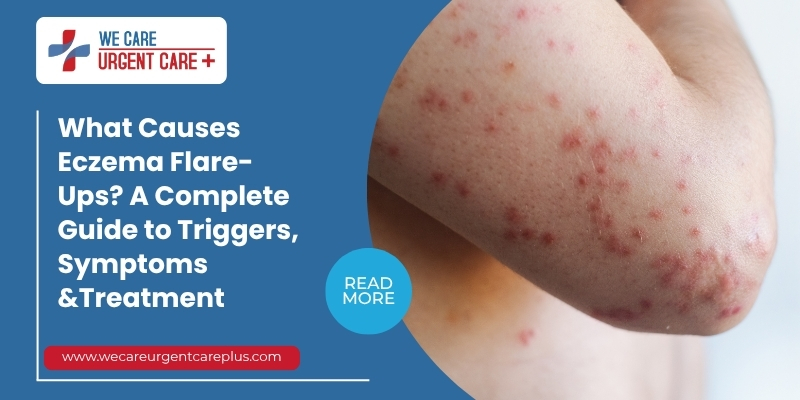
Before understanding what causes eczema flare-ups, it helps to recognize what eczema actually looks like on the skin. Eczema is not a single condition; it is an umbrella term for a family of inflammatory skin disorders. The most common type, atopic dermatitis, has a distinctive presentation that varies by skin tone and stage of flare.
On lighter skin tones:
- Patches of intense redness, often on the cheeks, behind the knees, inside the elbows, wrists, and neck
- Dry, scaly, or cracked skin that may ooze clear fluid during acute flares
- Skin that looks almost water-blistered or crusty when inflamed
On medium and darker skin tones:
- Eczema may appear as gray, purple, brown, or ashen patches rather than red ones
- Post-inflammatory hyperpigmentation (dark spots) is more common and longer-lasting
- Lichenification, thick, leathery skin from repeated scratching, develops faster
What Causes Eczema Flare-Ups? The Real Science
Eczema is rooted in a dysfunctional immune response combined with a compromised skin barrier. People with eczema have skin that does not retain moisture effectively because of mutations or deficiencies in a protein called filaggrin, which normally holds the skin’s outer layer together. When that barrier breaks down, allergens, irritants, and microbes slip through, triggering the immune system into an inflammatory overdrive.
But understanding what causes eczema flare-ups, specifically the day-to-day triggers that send a managed condition into an active crisis, is where most people need the most guidance.
1. Environmental Irritants
Harsh soaps, detergents, fragrances, and cleaning products can strip the skin barrier and trigger flare-ups. Wool, rough fabrics, and synthetic materials may also irritate sensitive skin.
2. Allergens: Airborne and Contact
Dust mites, pet dander, mold, and pollen can worsen eczema through immune reactions and skin contact. Seasonal allergies often make flare-ups worse.
Our Allergy Services include evaluation and management for patients dealing with the compounding effect of allergic disease and eczema because treating one without addressing the other often means incomplete relief.
3. Sweat and Heat
Sweat, heat, and friction can irritate eczema-prone skin and increase inflammation. Hot, humid weather often makes symptoms worse.
4. Stress and the Gut-Skin Axis
Stress can weaken the skin barrier, increase inflammation, and worsen itching. Gut health may also play a role in eczema severity.
5. Certain Foods
Common triggers include dairy, eggs, nuts, soy, wheat, fish, and shellfish, but reactions vary by person. A doctor-guided elimination diet can help identify triggers.
6. Skin Infections, particularly Staph
People with eczema are more prone to staph infections, which can worsen inflammation. Yellow crusting, warmth, or worsening symptoms may signal infection.
7. Dry, Cold Air and Low Humidity
Cold weather, air conditioning, and indoor heating can dry out the skin. This weakens the skin barrier and increases flare-ups.
Is Eczema Dangerous?
Eczema is not life-threatening, but it can lead to serious complications if not managed properly. It mainly affects quality of life rather than survival.
Secondary Infections
Scratching can break the skin, allowing bacteria or viruses to enter and cause infections. In severe cases, this may require urgent medical treatment.
Sleep Deprivation and Mental Health
Constant itching can severely disrupt sleep and lead to fatigue. It is also linked to higher rates of anxiety and depression.
Atopic March
Early eczema may increase the risk of developing allergies, hay fever, or asthma later in life. This happens due to a weakened skin barrier affecting the immune response.
Eczema Treatment and Management: The Long Game
Trigger Identification and Avoidance
Keeping an eczema diary helps identify triggers like foods, stress, environment, and sleep patterns. Over time, patterns become clearer for better control.
- The Wet Wrap Technique
Moisturizer-soaked, damp layers covered with dry fabric help calm severe flares. It reduces itching and improves healing, especially in children.
- Proactive Maintenance Therapy
Using mild topical steroids a few times weekly on prone areas prevents future flares. This helps control hidden inflammation before it worsens.
- Optimizing the Bathing Routine
Short lukewarm baths with gentle, fragrance-free cleansers followed by immediate moisturizing support the skin barrier. Bleach baths may help reduce bacterial load in recurrent cases.
- Stress and Sleep Management
Stress management techniques like CBT and mindfulness can reduce flare frequency. Good sleep habits also improve overall eczema control.
Eczema in Children: What Parents Need to Know
Pediatric eczema deserves special mention because the stakes are higher, the presentation differs from adults, and the emotional toll on families is enormous. Infantile eczema affects approximately 15–20% of children worldwide and typically presents in the first six months of life with facial and scalp involvement.
- Early use of emollients in newborns
- Especially important in high-risk infants
- May help reduce eczema development
- Focus on repairing the skin barrier
- Control inflammation with treatment
- Identify and avoid triggers
- Adjust medication carefully for children
- Consider developing body physiology
- Higher skin surface area affects dosing
Final Thoughts
Understanding what causes eczema flare-ups is the foundation of taking meaningful control over this condition. Eczema is not a personal failing, a hygiene issue, or something you simply have to tolerate. It is a chronic inflammatory condition with well-understood mechanisms, effective evidence-based treatments, and, with the right care team, a genuinely manageable course.
What eczema looks like on your skin, what triggers your specific flares, whether eczema poses danger to your health, and what eczema treatment and management looks like for your situation, all of these questions have real, personalized answers. You deserve those answers from a clinical team that takes your skin health as seriously as you do.
FAQs
Q1. Can eczema go away permanently, or is it lifelong?
Eczema may improve or disappear in some children, but others continue into adulthood or relapse later. Its course is unpredictable, so long-term management is often needed.
Q2. Is eczema contagious? Can it spread?
Eczema is not contagious and cannot be passed through touch or contact. Only secondary infections on the skin may sometimes spread, not eczema itself.
Q3. Does swimming in chlorinated pools help or worsen eczema?
Chlorine may irritate sensitive skin and trigger flares in some people. Others benefit, but rinsing and moisturizing after swimming is essential to prevent dryness.
Q4. Can hormonal changes trigger eczema flare-ups?
Yes, hormonal shifts during menstruation, pregnancy, or menopause can affect eczema. Symptoms may improve or worsen depending on individual hormonal response.
Q5. Are vaccinations safe for people with eczema?
Most vaccines are safe and recommended for eczema patients. Only certain live vaccines require caution in specific cases, so medical advice is important.
Q6. Does eczema go away?
Eczema may improve or even disappear in some people, especially children. However, many people experience flare-ups throughout life, so long-term management is often needed.
Q7. Is eczema contagious?
No, eczema is not contagious. You cannot catch it or spread it through skin contact, sharing items, or close contact with someone who has it.
Q8. What does eczema look like on the face?
Facial eczema usually appears as red, dry, itchy, and inflamed patches. The skin may also become rough, flaky, cracked, or slightly swollen, especially around the cheeks and eyelids.