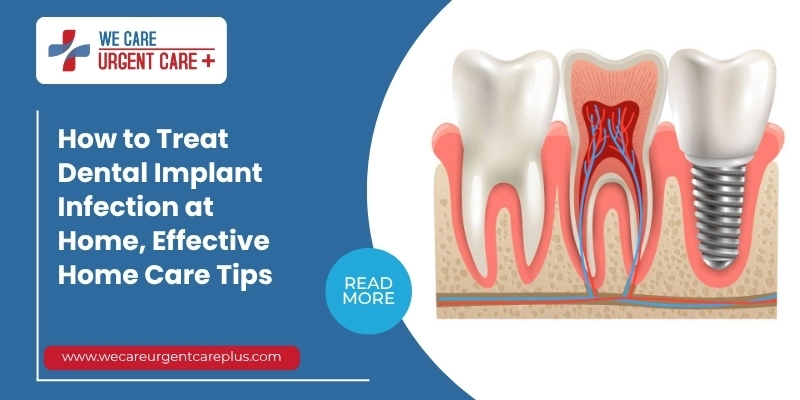
Dental implant infections do not always announce themselves with alarm-bell pain. Sometimes they creep in subtly, a little redness here, a faint ache there, until the damage to the surrounding bone has already begun. This is precisely what makes them so treacherous and why understanding how to treat a dental implant infection at home, and when to stop trying, can be the difference between saving your implant and losing it entirely.
Dental implant infection treatment is not a single action; it is a layered response. In the earliest stages, strategic home care can help suppress bacterial activity, reduce inflammation, and buy critical time before your dentist appointment. But home care has a ceiling, and recognizing that ceiling is just as important as knowing which rinse to use.
What Is Actually Happening Inside Your Gum?
Not all implant infections are created equal. Clinicians distinguish between primary categories, and understanding the difference will shape every decision you make about treatment.
Types of Infection
- Peri-implant mucositis is the earlier, reversible form. It affects only the soft gum tissue immediately surrounding the implant, causing inflammation without any underlying bone loss. Think of it as the implant equivalent of gingivitis, uncomfortable and concerning, but fully treatable when caught in time.
- Peri-implantitis is the more serious, progressive condition. It involves both soft tissue inflammation and measurable destruction of the bone that anchors the implant. Left untreated, peri-implantitis follows a predictable and damaging path: the bone recedes, the implant gradually loses its foundation, and eventually, implant failure becomes unavoidable. Unlike mucositis, peri-implantitis does not reliably reverse on its own, even with improved hygiene.
- Post-surgical infections are a third category distinct from peri-implant disease. They occur in the weeks immediately following implant placement, typically within the first two to four weeks, and are driven by bacterial contamination introduced during or after the procedure itself.
How common is infection after a dental implant?
The statistics are sobering. A 2024 systematic review and meta-analysis published through the Academy of Osseointegration and American Academy of Periodontology examined 102 studies involving over 13,000 patients and found that peri-implant mucositis affected approximately 46% of implant patients, while peri-implantitis, the bone-destructive form, affected about 21%. Over a 20-year window, the cumulative incidence of peri-implantitis reached 22%, meaning roughly one in five long-term implant patients will develop a serious infection at some point.
A separate systematic review applying the standardized 2017 World Workshop criteria found even higher rates, with up to one in four implant patients meeting diagnostic criteria for peri-implantitis. These numbers should not discourage anyone from choosing implants; their success rate remains over 90%, but they underscore why vigilant care and early detection matter so much.
Why Infections Occur: The Core Risk Factors
| Risk Category | Specific Factor | Relative Risk Level |
| Oral Hygiene | Poor plaque control around the implant | Very High |
| Systemic Health | Uncontrolled diabetes mellitus | High |
| Lifestyle | Active smoking habit | High |
| Medical History | Prior history of periodontal disease | High |
| Lifestyle | Regular alcohol consumption | Moderate |
| Body Weight | Obesity | Moderate |
| Prosthetic | Ill-fitting or cement-retained crown | High |
| Surgical | Inadequate implant positioning | Moderate |
Compliance | Missing routine dental check-ups | High |
What a Dental Implant Infection Looks and Feels Like
One of the most common mistakes patients make is assuming their discomfort is just lingering post-surgical soreness. Normal healing has a timeline; most acute pain and swelling resolve within seven to ten days. If symptoms persist, worsen, or appear after a period of feeling fine, something else is happening. Recognizing these signs early and seeking professional Dental Pain Relief can make the difference between a simple fix and a serious complication.
Warning Signs: Do Not Ignore These
- Persistent or worsening redness around the gum line of the implant
- Swelling that returns or intensifies after initial healing
- A deep, throbbing ache that differs from typical post-op tenderness
- Visible pus or discharge seeping from the gum tissue
- A bitter, metallic, or foul taste that does not resolve after brushing
- Spontaneous bleeding from the gum tissue when not provoked
- Fever above 38°C (100.4°F) accompanied by jaw or facial pain
- Swollen lymph nodes under the jaw or in the neck
What to Do If Your Tooth Implant Gets Infected
The moment you suspect an infection, your response in the next 24 to 48 hours matters enormously. Acting decisively but correctly can limit bacterial spread and protect both the soft tissue and the underlying bone.
DO These Things
- Rinse gently with warm saline (1/2 tsp salt per 8 oz water) 2–3 times daily.
- Apply a cold compress to the outside of your cheek for 10–15-minute intervals. Contact your dentist promptly, same day if a fever is present.
- Monitor symptoms carefully and note any changes in pain or swelling
- Take any already-prescribed antibiotics exactly as directed
- Sleep with your head slightly elevated to reduce swelling
- Eat soft, cool foods and avoid chewing near the affected area
AVOID These Mistakes
- Poking, pressing, or squeezing the infected area spreads bacteria
- Using aspirin directly on the gum tissue causes chemical burns
- Attempting to remove or adjust the implant yourself causes catastrophic damage
- Assuming it will resolve on its own without professional assessment
- Self-prescribing antibiotics from a friend or a leftover prescription
- Consuming alcohol or smoking, which impair healing and worsen infection
- Ignoring a fever signals that the infection may be spreading systemically
Evidence-Based Home Care
1. Warm Saline Rinses: The Gold Standard of Home Care
Saltwater is not glamorous, but it is one of the most clinically supported home interventions available. A warm saline solution creates a hypertonic environment and gently cleanses the surgical site without disrupting healing.
2. Cold Compress: Managing Swelling from Outside
A cold pack applied to the cheek for 10 to 15 minutes at a time, with at least 15-minute breaks between applications, reduces vascular permeability and slows the inflammatory cascade, meaningfully reducing discomfort and external swelling during the first 48 to 72 hours.
3. Diluted Hydrogen Peroxide Rinse Use With Caution
A dilute 1.5% hydrogen peroxide rinse made by mixing equal parts standard 3% drugstore peroxide and water can help reduce the bacterial biofilm around the implant. However, use it no more than once daily and for a maximum of one week.
4. Chlorhexidine Mouthwash When Your Dentist Approves It
Chlorhexidine gluconate (0.12% to 0.2%) is the most rigorously studied antiseptic mouthwash for peri-implant infections. Clinical evidence shows it meaningfully reduces bacterial counts and bleeding on probing.
5. Oil Pulling Limited Evidence, Low Risk
Coconut oil pulling, swishing one tablespoon of coconut oil for 10 to 15 minutes, has some anecdotal and limited study support for reducing oral bacteria counts. The evidence for implant-specific infections is negligible, and it should never replace clinically supported care.
The Role of Antibiotics
| Antibiotic | Typical Use Case |
| Amoxicillin | First-line treatment; broad spectrum against oral bacteria |
| Amoxicillin-Clavulanate (Augmentin) | When amoxicillin alone is insufficient, broader beta-lactamase coverage is required |
| Metronidazole | Targets anaerobic bacteria dominant in peri-implantitis |
| Clindamycin | Alternative for penicillin-allergic patients |
| Azithromycin | Penicillin-allergic patients; prolonged tissue presence |
| Minocycline (topical) | Locally applied by a dentist during surgical treatment |
When Home Care Is Not Enough
There is a threshold beyond which home remedies and antibiotics become insufficient, and recognizing that threshold is not a sign of failure; it is clinical wisdom. The goal of home care was never to replace your dentist. It was to support your body while you get to one.
Situations Requiring Immediate Professional Care
- Fever above 38°C (100.4°F) that persists for more than 24 hours
- Spreading facial swelling that moves toward the eye, neck, or throat
- Any degree of implant mobility or looseness
- Persistent pus discharge that continues beyond 48 hours of home care
- Difficulty swallowing or opening the mouth fully
- Worsening pain despite appropriate pain management
- Symptoms that show no improvement within 48 hours of home care
What Your Dentist or Oral Surgeon Will Do
Professional dental implant infection treatment typically follows a staged protocol, beginning with the least invasive effective option and escalating only if necessary.
- Clinical Examination & Imaging
Probing depth measurements, X-ray or CBCT scanning to assess bone loss, and assessment of implant stability.
- Non-Surgical Debridement
Mechanical removal of bacterial biofilm from the implant surface and surrounding pocket using specialized instruments.
- Antiseptic Irrigation
Chlorhexidine or hydrogen peroxide irrigation directly into the peri-implant pocket under controlled conditions.
- Antibiotic Therapy
Systemic or locally delivered antibiotics are prescribed based on bacterial assessment and severity.
- Surgical Intervention
In advanced peri-implantitis, open flap debridement, bone grafting, or implantoplasty is performed to decontaminate and regenerate lost bone.
- Implant Removal (Last Resort)
Only when the implant has failed to integrate or when bone loss is so extensive that salvage is impossible.
How to Prevent Infection After Dental Implant
Prevention is not a passive concept when it comes to dental implants. It requires deliberate, daily action because, unlike natural teeth, implants lack the periodontal ligament’s inflammatory signaling system, meaning infection can advance with less obvious early warning.
Daily Oral Hygiene Protocol for Implant Patients
- Brush twice daily using a soft-bristled or implant-specific toothbrush, avoiding stiff bristles that abrade the gum margin
- Use an interdental brush or water flosser daily. Standard floss can shred against implant abutments and leave fragments behind
- Use an alcohol-free, antimicrobial mouth rinse (such as cetylpyridinium chloride-based products) as a daily maintenance rinse
- Angle the brush at 45 degrees toward the gumline to disrupt the bacterial biofilm that accumulates in the sulcus around the implant
- Clean the area under implant-supported bridges using a bridge threader and specialized implant floss daily
Lifestyle Factors That Protect Your Implant
- Quit smoking
- Control blood sugar if diabetic
- Limit alcohol consumption
- Attend dental check-ups every 6 months
- Wear a night guard if you grind your teeth
- Maintain a healthy body weight
Conclusion
A dental implant is one of the most significant investments you can make in your oral health and, by extension, your confidence, nutrition, and quality of life. Understanding how to treat a dental implant infection at home means knowing both what you can do and precisely where the limits of self-care lie.
Understand antibiotics as a tool requiring a prescription and professional judgment, not a first resort you manage independently. When in doubt, don’t wait. The team at We Care Urgent Care is here to help you navigate every step of your dental health journey, from prevention to treatment and beyond.
FAQs
Q1. Can a dental implant infection affect other parts of the body?
Ans: Yes, in rare cases, bacteria can enter the bloodstream and contribute to systemic infections. This is more likely in people with weakened immunity or untreated severe infections.
Q2. How long does it take to fully recover from an implant infection?
Ans: Recovery time varies depending on severity, ranging from a few days to several weeks. Early-stage infections resolve faster, while advanced cases may require longer treatment.
Q3. Are dental implant infections contagious?
Ans: No, implant infections themselves are not contagious between people. However, harmful oral bacteria can be transferred through poor hygiene practices.
Q4. Can stress contribute to dental implant complications?
Ans: Yes, chronic stress can weaken the immune system and slow healing. It may also increase habits like teeth grinding, putting pressure on the implant.
Q5. Is it safe to exercise with a dental implant infection?
Ans: Light activity is usually fine, but intense workouts may worsen swelling or discomfort. It’s best to avoid heavy exertion until symptoms improve or your dentist advises otherwise.
Q6.Can a dental implant infection be seen on an X-ray?
Ans: Yes, X-rays can reveal bone loss or changes around the implant, indicating infection. Early soft tissue inflammation may not show, so clinical examination is also needed.