If you’ve ever suffered a deep cut and found yourself wondering, “Does urgent care do stitches?” the short answer is yes. Most urgent care centers are fully equipped to assess, clean, and stitch wounds quickly and affordably, without the long wait times and high costs associated with a hospital emergency room.
Whether you’re dealing with a kitchen knife accident, a sports injury, or a glass-related cut, knowing where to go and what to expect can save you time, money, and unnecessary stress. In this guide, we’ll walk you through everything you need to know about getting stitches at urgent care, from how to tell if you actually need them, to how much it costs with and without insurance.
What Are Stitches and When Do You Need Them?
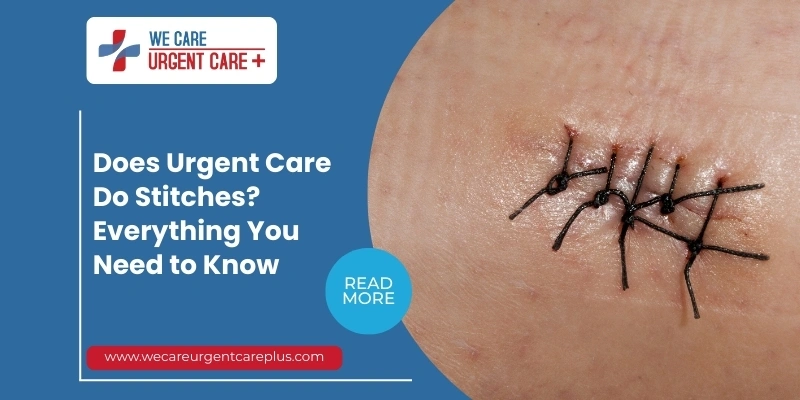
Stitches, also called sutures, are a method of closing a wound by using a medical thread to bring the edges of the skin together. They serve three key purposes: stopping the bleeding, reducing the risk of infection, and minimizing scarring as the wound heals.
Not every cut needs stitches. Many small, shallow cuts heal perfectly well on their own with proper cleaning and a bandage. However, certain wounds require professional closure to heal correctly.
In addition to traditional stitches, medical providers may also use:
- Skin staples are often used on the scalp or large lacerations
- Skin glue (Dermabond) is used for smaller, clean cuts in low-tension areas
- Steri-strips / butterfly closures for minor wounds with well-aligned edges
Can You Get Stitches at Urgent Care?
Yes, you can absolutely get stitches at urgent care. In fact, urgent care is often the best option for most lacerations that don’t involve life-threatening complications. Urgent care centers are staffed by licensed physicians, nurse practitioners, or physician assistants who are trained to handle wound care, including suturing.
Most urgent care centers have the equipment and supplies needed to:
- Assess the depth, size, and location of the wound
- Clean and disinfect the area thoroughly
- Administer a local anesthetic to numb the area
- Close the wound with sutures, staples, or skin glue
- Dress the wound and provide aftercare instructions
- Administer a tetanus shot if needed
It’s worth noting that some very complex wounds, such as those involving tendons, nerves, or embedded foreign objects, may be beyond the scope of urgent care and require an emergency room visit. When in doubt, call the urgent care center ahead of time to confirm they can handle your specific injury.
Signs You Need Stitches
One of the most common questions people ask after a cut is: “Do I actually need stitches?” Here are the key signs that your wound likely needs professional closure:
- The wound is longer than half an inch (1.25 cm)
- The cut is deeper than a quarter of an inch and won’t stop bleeding
- The wound edges are gaping, jagged, or won’t stay together on their own
- Bleeding doesn’t slow down after 10–15 minutes of direct pressure
- You can see yellowish fat tissue, muscle, or bone
- The wound is located on a joint (knee, knuckle, elbow) or the face
- The cut was caused by a dirty or rusty object, increasing infection risk
- The wound is on a child’s face or near their eyes
When to Get Stitches at Urgent Care vs. the Emergency Room
Knowing where to go for stitches is crucial both for your health and your wallet. Here’s a clear breakdown to help you make the right call:
| Situation | Go to Urgent Care | Go to the ER |
| Bleeding | Controlled or slowing | Severe, uncontrolled |
| Wound Size | Less than 2 inches, not too deep | Very deep or longer than 2 inches |
| Visible Structures | Skin and fat only | Visible muscle, tendon, or bone |
| Foreign Objects | None present | Glass, metal, or debris embedded |
| Location | Arms, legs, torso, scalp | Face near eyes, eyelids, genitals |
| Other injuries | Isolated wound only | Head injury, broken bones, or shock |
| Nerve\tendon damage | No numbness or movement loss | Numbness, tingling, or can’t move area |
| Infection Signs | Fresh wound, no infection yet | Signs of serious infection or abscess |
What to Expect When Getting Stitches at Urgent Care
Many people feel anxious about getting stitches, especially if it’s their first time. Here’s a step-by-step breakdown of what typically happens during a visit:
Step 1: Check-In and Triage
You’ll be checked in at the front desk and triaged to assess the severity of your injury. Most urgent care centers accept walk-ins, and wounds typically receive priority treatment.
Step 2: Wound Assessment
A medical provider will examine the wound carefully, checking its size, depth, location, and whether any underlying structures (tendons, nerves, bone) might be affected. They may order an X-ray if a foreign object or bone injury is suspected.
Step 3: Cleaning and Disinfection
The wound is thoroughly irrigated (flushed) with saline solution to remove debris and bacteria. This is one of the most important steps to prevent infection.
Step 4: Local Anesthetic
A local anesthetic (usually lidocaine) is injected around the wound to numb the area. This may sting briefly, but once it takes effect, you should feel little to no pain during the suturing process.
Step 5: Suturing the Wound
The provider will carefully close the wound using the most appropriate method: stitches, staples, or skin glue. The number of stitches depends on the wound’s length and depth. Most suturing takes between 15 and 45 minutes.
Step 6: Dressing and Aftercare Instructions
Once sutured, the wound is cleaned again and dressed with a sterile bandage. You’ll receive detailed aftercare instructions, including how to care for the wound at home and when to return for stitch removal.
Typical stitch removal timeline: Face (3–5 days), scalp (7–10 days), arms/legs/trunk (7–10 days), joints (10–14 days).
How to Care for Stitches at Home
Proper aftercare is just as important as the stitching itself. Follow these guidelines to ensure your wound heals cleanly and without complications:
- Keep the wound clean and dry for the first 24–48 hours
- Gently clean the area daily with mild soap and water after the first 48 hours
- Apply a thin layer of antibiotic ointment (like Neosporin) and a fresh bandage
- Avoid submerging the wound in water, no swimming, baths, or hot tubs
- Do not pick at or scratch the stitches
- Protect the wound from direct sunlight to minimize scarring
- Return to have stitches removed at the recommended time. Don’t delay
Signs of Infection to Watch For
Contact your urgent care provider immediately if you notice any of the following:
- Increasing redness, warmth, or swelling around the wound
- Pus or cloudy discharge from the wound
- Fever over 100.4°F (38°C)
- Red streaks spreading from the wound
- Wound reopening or stitches coming loose
Conclusion
Getting stitches at urgent care is a fast, affordable, and effective solution for treating most moderate cuts and lacerations. If your wound is deep, gaping, or bleeding heavily, seeking prompt medical attention can significantly reduce the risk of infection and scarring while promoting proper healing.
However, not every injury requires sutures. A trained medical provider can evaluate your wound and recommend the best treatment option, whether that’s stitches, staples, skin glue, or conservative care. For more comprehensive primary and urgent care support for wound assessment and overall health concerns, visit Fattah Primary Care
for expert guidance and personalized treatment.
FAQs
Q1. Does urgent care do stitches for kids?
Ans: Yes. Most urgent care centers treat pediatric patients and are experienced in handling lacerations in children.
Q2. Can I walk in for stitches without an appointment?
Ans: Absolutely. Urgent care centers are designed for walk-in patients.
Q3. How long does it take to get stitches at urgent care?
Ans: The total visit typically takes 1 to 2 hours, including check-in, assessment, cleaning, and suturing. The suturing itself usually takes 15–45 minutes, depending on wound complexity.
Q4. Will urgent care do stitches on my face?
Ans: Most urgent care centers can suture facial wounds, and providers take extra care with facial lacerations to minimize scarring.
Q5. Do I need a tetanus shot with stitches?
Ans: If your wound was caused by a dirty or rusty object, and you haven’t had a tetanus booster in the last 5–10 years, your provider will likely recommend one.
Q6. What if my stitches come loose or fall out early?
Ans: If a stitch comes undone before the recommended removal date, contact your urgent care provider right away.